

Welcome back to The CP Journal, where we break down what it takes to get left of bang.
We talk a lot about situational awareness in our articles and with our clients, but I don’t know if I’ve written much about the hidden cost that emerges once people begin using it in their organizations to become more proactive.
Situational awareness comes with its own set of terms and conditions that you accept when you set out to get left of bang. The problem is, just like the T&C box we blindly accept when using a software platform, we rarely read it or understand the tradeoffs before we take the first step.
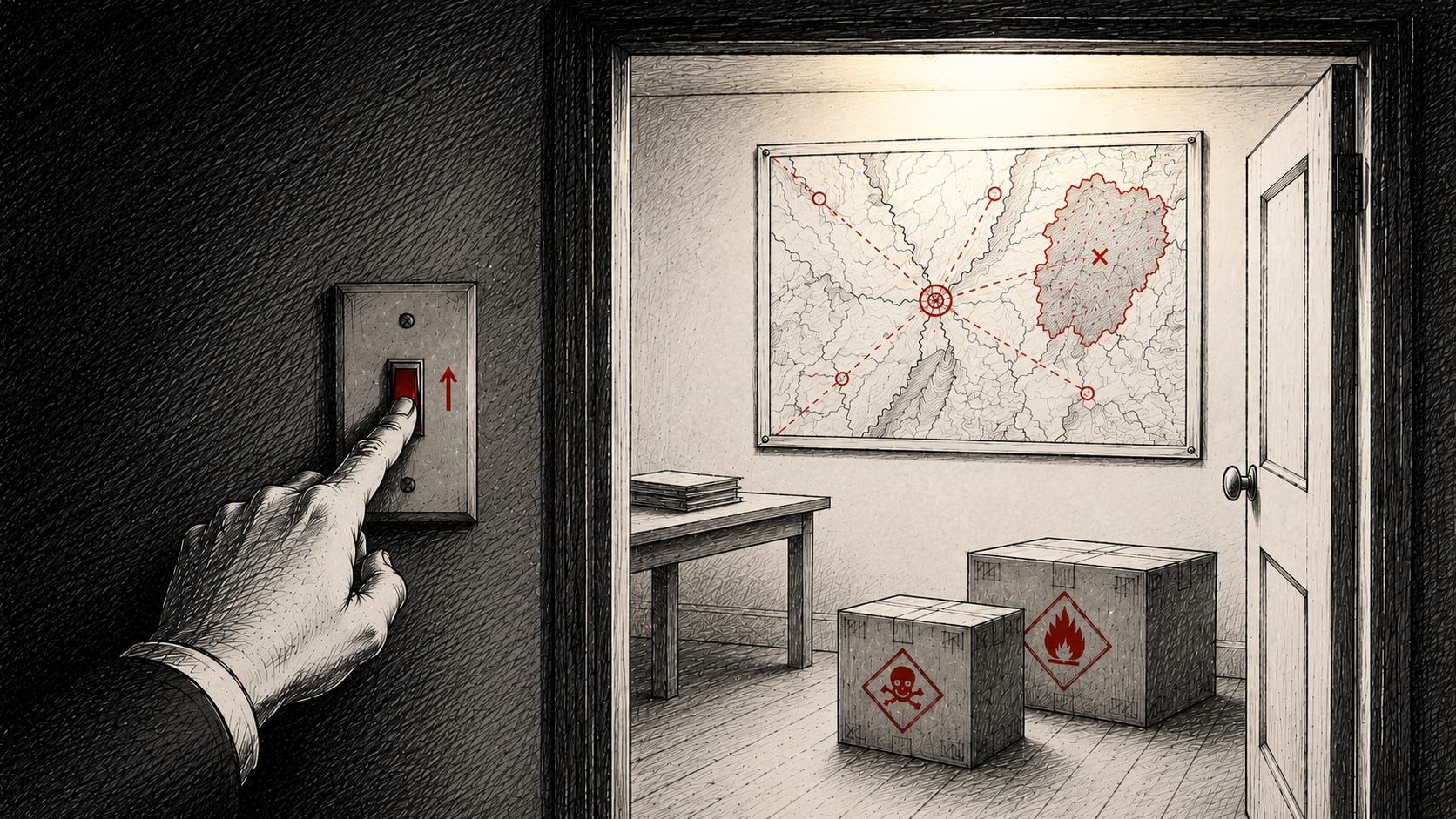
When it comes to awareness, what you are agreeing to is this: once you start to see some things, you start seeing a lot of things. Situational awareness is like turning on the lights in a dark room. When that happens, you see the whole room, not just the thing you were looking for.
You can’t necessarily control or limit or contain where that awareness gets directed. So you see the good and the bad. You see things that are pleasant, and you see things that aren’t. And it changes something in you because once you see reality clearly, you lose the ability to pretend you didn’t.
This is the hidden cost of situational awareness.
Once that awareness exists, the responsibility to act also presents itself since you can no longer honestly say, “I didn’t know,” or “nobody could have predicted this,” or “we never saw it coming.” While I think this is easy to accept in theory and when the risks are abstract, I have routinely seen the impacts of this reality on organizations and their leaders the moment a risk becomes something real and tangible.
The difference between an individual improving their situational awareness and an organization doing the same is how public the decision-making process is. When an individual observes human behavior, establishes a baseline, identifies anomalies, assesses the threat level, makes a decision, and acts, the entire decision-making process occurs in their head. An external observer is limited to whatever explanation that person gives to justify their action, or lack of action, in a situation.
But in an organization, the entire recognize→assess→decide→act process is visible. There are emails, messages, debates around conference tables or video meetings, and there is a record—at least with those present—of what decision was or wasn’t made.
Without awareness of your surroundings or environment, that process never happens because nothing ever triggered the conversation about a potential threat, hazard, or opportunity. Yet with awareness, it happens routinely.
When I said at the top of the essay that situational awareness costs a person the ability to say, “we never saw it coming,” this is what I mean. Once a conversation about a potential threat happens, there is a record that you were in fact aware and that you made a decision about what to do about it.
So, what decisions do organizations make? In my experience, I’ve found that there are four general ways that people respond to being presented with challenging and uncomfortable issues in their organizations.
First, there are those that simply opt out. They recognize the cost of situational awareness and shut down the program, essentially choosing to revert back to how they were operating before they were aware because they don’t believe the cost of awareness is worth the reward. Whether this is the right or wrong way to deal with the challenge is beside the point—many organizations choose to not see what is happening.
Second, there are those who manifest the organizational equivalent of the “freeze” response to a new stress or threat. They don’t explicitly opt out, because that decision carries its own risk, but they avoid making any meaningful decisions once they become aware of a problem. They might rationalize away any perceived risks. They may postpone a decision by requesting more information or data in the pursuit of certainty. They may defer a decision until the next budget cycle in an attempt to buy themselves time before actually making a choice about how to respond.
Third, there are those that become incredibly busy. In response to an unanticipated problem they just discovered, people and teams start moving a thousand miles an hour, frantically trying to address everything all at once. But there are no real priorities, and whether those actions are the right ones is a different story. There is an odd form of career safety in activity. Being busy can feel safer and easier to justify than actually prioritizing what would be the best use of their time.
And fourth, you have the leaders who recognize the environment for what it is, understand that they are going to have to make some decisions—often some very tough ones—and act based on what they understand now. This path is admittedly reserved for only those who can accept their reality, and even though they can’t change the past or redo the decisions that got them into this position, they recognize they can control what they do going forward.
To be clear, I don’t envy the leaders in this situation. Sometimes clients become friends through a project, and I often find myself wishing that they didn’t have to do the hard thing. I recognize that what they thought they would do in the job, or what they wanted to do in the job, needs to get put aside so they can focus on what has to be done.
They might need to upset some external partners or members of their own team. They might need to re-allocate their limited budget, tell people no, accept short-term political pain, change priorities, and admit that previous assumptions might have been wrong. Even when those decisions are necessary, it doesn’t mean they are particularly fun or enjoyable or easy.
But at the same time, it’s what their organization, or their community, requires of them. It’s what their role as an executive and leader demands of them. It’s where they have to decide whether they are the ones to continue leading the organization—whether they have the resolve and willingness to lead that transformation—or whether they need to step aside so someone with the energy to drive this change can take the helm.
That’s why it is important to acknowledge the cost that situational awareness carries from the onset. The better you and your organization become at seeing emerging problems, the more uncomfortable truths you will encounter. In other words, better observations only increase the frequency of difficult decisions.
But with each early recognition of an emerging problem and each tough decision that follows, organizations gain the ability to get ahead of it, shape their environment, position themselves, and be well-prepared whenever it happens. To me, that’s the test. It is what happens after awareness has been achieved that makes situational awareness valuable.
Before You Go
Know someone responsible for helping an organization prepare for uncertainty? Share this newsletter with them.
Go deeper with a paid subscription for advanced courses, playbooks, and full podcast episodes.
Ready to strengthen your organization’s readiness? Active Analysis Consulting helps organizations improve decision-making, operational capability, and preparedness.