

Welcome back to The CP Journal, where we break down what it takes to get left of bang.
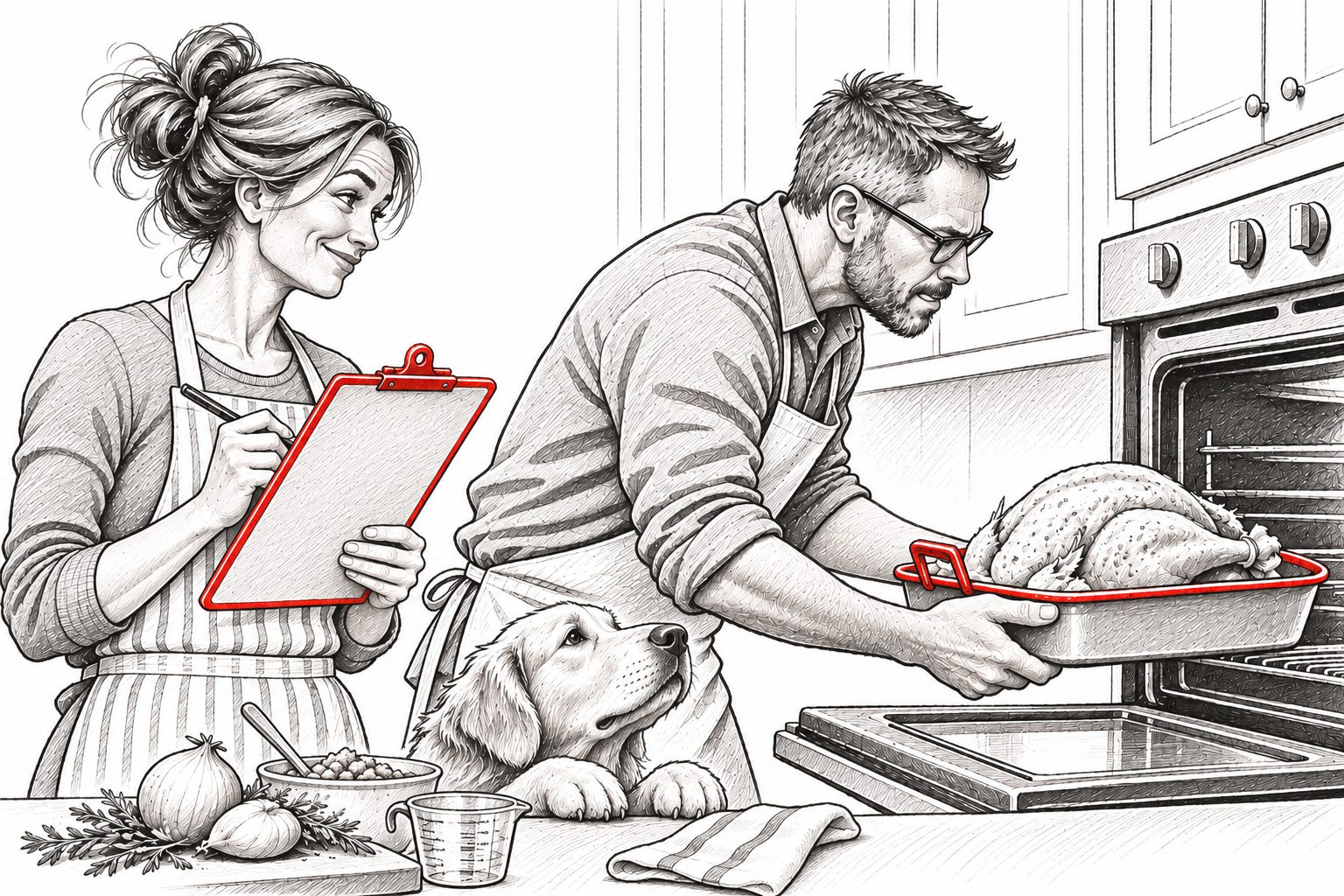
Turkeys go in the oven in about 96 hours. Are you ready?
For those of you I haven’t met, I spend my days working with (mostly) public safety and emergency management agencies to prepare their organizations for an uncertain future. That might mean developing the ability to evacuate entire neighborhoods ahead of a fast-moving wildfire, warning communities before floodwaters make relocation impossible, managing civil unrest, or responding to an act of terrorism.
And it turns out that the same four things I look for when assessing an organization’s ability to respond to and recover from these emergencies can help the kings and queens of the kitchen figure out just how ready they are for Thanksgiving dinner—and what they might want to address before their alarms go off Thursday morning.
So, if you’re about to strap on your apron with the goal of serving a delicious dinner to 15 people, getting all of the food on the table at roughly the same time, minimizing the chances of one of the many cooks in the kitchen cutting off a finger, and avoiding unintentionally poisoning a family member with undercooked turkey, this article is for you.
And for those of you who won’t be home for Thanksgiving because you’re forward-deployed and keeping our country safe, or working the holiday shift protecting our communities, thank you.
I recognize that the freedom to spend my time writing about an unnecessarily complicated approach to something families have done successfully for generations is made possible by people like you. So, thank you.
Capability Assessments | The Short Version
A capability is the ability to do something or perform a function to a set performance standard or goal.
When we assess a capability, we look at four distinct components to understand where we’re strong and where we have room to improve. We consider each element individually, but also how they work together to produce the outcome we’re trying to achieve.
The four elements are:
Plans: How an organization intends to accomplish something to the standards it has established. For Thanksgiving dinner, this might be the recipes, the timeline for when different dishes need to be prepared and put in the oven, and who’s responsible for making each one.
People: Do the people responsible for executing the plan have the skills and understanding necessary to fulfill their responsibilities? How will the team be organized, and who’s in charge? You might have a lot of cooks in the kitchen this week, but I’ll leave it to you to figure out the right way to task your in-laws.
Resources: The supplies, equipment, technology, and funding needed to execute the plan. For Thanksgiving, we’re talking about everything from ingredients and roasting pans, to meat thermometers, serving dishes, cooking utensils, and the ever-important refrigerator space.
Validation: Do you actually know whether your people can execute the plan with the resources available? Have you tested it? If you haven’t, you might be confident that everyone can do their part, but you don’t KNOW that they can. That distinction matters when we’re talking about things you really don’t want to get wrong (like evacuations and the turkey).
We’ll explore each of these elements in greater detail below, along with a few lessons from where we’ve seen things go wrong. But the important thing to understand is that all four contribute to a fully developed capability. When one is missing or underdeveloped, it introduces vulnerabilities and uncertainty about whether we can reliably accomplish what we’re trying to do.
For some things, that’s perfectly appropriate. Nobody needs a detailed plan and an exercise program for ordering pizza online. But when people are relying on us to deliver, we should have a pretty good understanding of whether we’re actually capable of doing so.
And by keeping that end goal in mind (the delicious dinner or the successful evacuation), we can avoid preparing for the sake of preparing. In disasters, we’re preparing to respond to and recover from them. In the kitchen, we’re preparing to deliver a delicious meal. In business, we might be preparing to close deals or build products that solve our customers’ problems.
Once we’ve assessed the four elements, we can make better decisions about where to invest our limited time, money, attention, and effort. With Thanksgiving only a few days away, you probably aren’t going to fix everything. But you can figure out which improvements are worth spending the time you have left on, which gaps you can live with, and what might take your dinner to the next level.
Of course, having the capability to prepare Thanksgiving dinner doesn’t mean you’re going to execute it in a sterile, distraction-free environment. There are plenty of things happening around you that can influence how smoothly the day goes.
You might have an uncle who is dying to talk about the midterm elections, your grandma explaining how she uses the ChatGPT, or a college-age cousin sharing breaking news they just heard on TikTok. And somehow, you’re supposed to keep the turkey from drying out while navigating all of it.
The environment you operate in matters, whether you’re preparing Thanksgiving dinner or responding to a disaster. For a deeper look at the six elements of the operating environment and how we’re assessing them for public safety professionals heading into 2027, check out last week’s briefing.

Plans
Plans are the foundation of a capability. They describe what a person, team, or organization intends to do, and sometimes how they’re going to do it, to accomplish their goals. For Thanksgiving dinner, we’re generally talking about recipes, the timeline for preparing, cooking, and serving different dishes, and who’s responsible for doing what.
Of course, some of you are already thinking that you don’t need a plan. You’ve cooked Thanksgiving dinner for years. You know what you’re doing. Fair enough. Experienced cooks can accomplish quite a bit without constantly referring to a recipe.
But a plan is simply thought before action. It isn’t acting and then thinking, or acting and thinking simultaneously. Thought before action.
And I never said that a plan had to be written either. A recipe, much like an emergency operations plan, can exist inside someone’s head—the writing is only a means to share the plan with others in a consistent way.
So if the plan/recipe stays in your head, as long as you accept that everyone else will be coming to you with questions about what they should be doing, when they should start, and how they can help, then it works. Also, when you give people verbal instructions, you have to account for the fact that they might not remember everything you said, might interpret your instructions differently than you intended, and go off-script as a result.
Which brings us to the people who don’t read the plan.
If you’ve spent the week coordinating oven space and cooking times, only to have a picky eater announce that they need to put French fries in the oven for 45 minutes at 450 degrees, you have every right to tell them they aren’t getting their fries until dinner is nearly done because the oven is accounted for until people sit down to eat. You’re not ruining my turkey because you couldn’t be bothered to coordinate what you needed to do with the other people it will impact.
And if you’re planning to improvise your way through the day because you’re great at reacting to problems, that’s fine too. Just understand that when your improvisation starts affecting everyone else’s ability to get dinner on the table, while it’s still warm, those consequences are yours to own.
But there’s another side to this. If you’ve written a detailed plan and nobody bothers to read it, you might need to consider whether you’ve developed the right plan for the people expected to use it.
This is where the Goldilocks principle comes into the kitchen and emergency operations centers.
An experienced baker probably doesn’t need a step-by-step recipe explaining how to make an apple pie, but they might benefit from a short checklist of the major steps and timing considerations so they don’t miss something while juggling three other dishes. Someone making homemade gravy for the first time, on the other hand, might need considerably more detail.
Someday I’ll share the absolutely perfect recipe template that does this in a single document, but you probably want a high-level plan that outlines major steps in a recipe or for dinner, supported by more detailed recipes and instructions when they’re needed.
The goal is to give people enough direction to accomplish their responsibilities without burdening them with information they don’t need. Plans, when they are written or shared, allow multiple people to operate with a shared understanding of what needs to happen without constantly checking in about what’s next.
Now, how much direction they need depends quite a bit on the people who will be doing the work.
People
Having a plan is a good start, but whether you can actually execute it depends quite a bit on the people responsible for doing the work. Do they have the skills to perform their assigned tasks? Do they know how to use the equipment they’ll be working with? Can they do those things to the standards you’ve established? Can they do it with your dog circling their legs because they’ve decided they are their new best friend?
This is also where the skills of your team need to inform the plans you develop.
Think about the rookie quarterback entering an NFL game on Thanksgiving from the bench. Their coaches aren’t going to hand them the entire playbook and expect them to execute every play flawlessly. They’re going to select the plays the new QB has demonstrated they can execute successfully and build the game plan around those abilities.
The same applies in the kitchen. If you’re inviting your kids to help prepare dinner, that’s great. But you probably need to account for the additional time it will take to teach them what to do, supervise their work, and potentially redo something that doesn’t turn out quite right.
Also, we need to talk about continuity.
What happens if your grandma, the only person who knows the secret homemade gravy recipe, gets stuck at the airport? Or someone decides that Thanksgiving morning is the perfect time to introduce Bloody Marys to the family tradition, and you have to make the call to take the knife away from your sister-in-law before they start adding new sources of protein to the stuffing?
What’s Plan B?
Everyone thinks continuity of operations planning is dorky and excessive until they’re facing Thanksgiving dinner without a dish they’ve eaten every year since they were 7. And with grocery stores, restaurants, and delivery options limited on the holiday, you might not have a lot of alternatives.
Anyway, the point is that your capability depends on having people who can execute the plan, perform the required tasks, and step in when someone else can’t. And if you’re depending on a single person to make something happen, you should probably understand what happens when they aren’t available.
Resources
Even with a great plan and an experienced team, you’re going to need the right resources to get Thanksgiving dinner on the table. We’re talking about ingredients, pots and pans, cooking utensils, appliances, refrigerator space, and all of the other things required to prepare and serve the meal.
But here’s where resources and planning need to work together.
If your plan assumes you have restaurant-grade refrigerator space and oven capacity, but you happen to live in a house rather than a restaurant, you’ve got a problem.
You can either acquire additional resources or adjust your plan to work with what you have available. But ignoring the mismatch and hoping everything works out on Thursday isn’t a particularly effective strategy.
You also need to understand the dependencies that come with the resources you’re counting on.
For example, if your fancy AI-powered turkey thermometer relies on Bluetooth to transmit the bird’s temperature to your phone, and suddenly you can’t tell whether the turkey is cooked because you dropped your phone into the garbage disposal, find the nearest elder in your family and ask for help. Technology can be incredibly useful, but you should probably understand what happens when it stops working.
And while we’re thinking about resources, have you actually inventoried what you need? Do you have the turkey yet? Is it going to be thawed in time? Did you replace the baster you broke last year? What happens if you forget an ingredient or you discover that the roasting pan you just bought doesn’t fit in your oven?
The show must go on, and having a few alternatives in mind can make a big difference when something inevitably doesn’t go according to plan. Of course (as I have to remind myself every year), not every resource gap requires buying something new. Sometimes you can borrow equipment, substitute an ingredient, change the cooking schedule, or find another way to accomplish the same objective.
The important thing is to understand what you need, what you actually have, and where a missing resource could prevent you from delivering the meal.
On a related note, if someone makes an AI-enabled turkey thermometer that monitors the bird’s internal temperature, tracks the ambient temperature of the oven, accounts for the turkey’s weight, and displays all of that information on my iPad with an estimated completion time and real-time line charts showing temperature fluctuations, I will absolutely buy it.
I’ll keep a simple backup thermometer, of course. But I’ll pay extra if I can compare my cooking performance against other users of the app. That sounds like exactly the kind of technology we need in the kitchen.
Validation
Everything might look great on paper, but until you’ve actually tested your ability to execute the plan, you don’t really know how things are going to turn out.
The first year I got to make the Thanksgiving turkey, my wife and I decided to test the recipe on a chicken a few weeks beforehand. Our recipe uses an herb butter that we rub underneath the skin to help keep the turkey moist. So we figured we’d practice the technique on a four-pound chicken, but used the same amount of butter the recipe called for on an 18-pound turkey.
The chicken was practically inedible—it became pizza night instead—but I learned more about the role that butter plays in the recipe than I ever would have by simply reading the instructions. And importantly, we learned that lesson a few weeks before Thanksgiving rather than while 15 people were sitting around the table waiting for dinner.
That’s the value of validation. You get to find out what works, what doesn’t, and what you might need to change while you still have time to do something about it.
Of course, testing a recipe on a chicken doesn’t necessarily prove you can prepare an entire Thanksgiving dinner. It might help validate a particular technique, but you’ve still got to coordinate multiple dishes, manage limited oven space, and get everything to the table at roughly the same time.
Finally, think about your contingency plans. If the power goes out on Thursday morning, are you prepared to cook the turkey on the grill? Do you have enough propane? Have you ever actually cooked a turkey that way?
With the news over the past few weeks and the prepper-level preparations that people seem to be taking, I suspect a few of you already have an answer to that question.
The point is that practicing individual tasks, testing equipment, and exercising the entire process can reveal very different things about your readiness. And while you might not have time to run a full-scale Thanksgiving rehearsal between now and Thursday, there’s probably something you can check or practice that would give you greater confidence in your ability to deliver dinner.
Putting Your Culinary Readiness to the Test
Could you get Thanksgiving dinner on the table without having all four elements of a capability fully developed? Absolutely. An experienced cook might compensate for a poorly developed plan. A detailed recipe might help someone with less experience produce a meal. And you can probably survive without a turkey baster by using a spoon to collect the juices from the bottom of the roasting pan.
But do you really want to find out what works and what doesn’t while 15 people are sitting around the table waiting for dinner?
That’s the value of assessing your capabilities before you need them. You can identify where you’re strong, where you might struggle, and which improvements are worth spending your limited time, money, and attention on. With Thanksgiving just a few days away, you can probably can’t address everything, but you can decide which gaps you’re comfortable living with and which improvements might take your dinner to the next level.
And once dinner is over, don’t forget to debrief. Your family will want nothing more than a facilitated discussion about what worked and what didn’t before they leave the table. Make sure you bring a whiteboard or sticky notes to dinner so you can track and prioritize feedback.
While that might feel ridiculous in some households, you do want to take a moment to write any lessons or observations down and put them somewhere you’ll find them next November. Thanksgiving, much like a major disaster, is a relatively infrequent event. Your day-to-day cooking experience won’t necessarily prepare you for everything that comes with it, and you certainly won’t remember every lesson you learned this year.
Besides, there’s no reason to make the same mistakes next Thanksgiving when you have an entirely new set of mistakes you could be making instead.
I hope you all have a great holiday and I’ll see you next week.
—Patrick