

Welcome back to The CP Journal, where we break down what it takes to get left of bang.
Fifteen years ago this month—in August 2011—I wrote the first article that eventually became The CP Journal.
At the time, we had just received an offer to write Left of Bang, and I realized that if the book was going to have any chance of succeeding, I needed to become a better writer. And after reflecting on some early article drafts, I recognized that I needed to become a better thinker.
Looking back today, those early articles make me cringe as often as they make me smile. They were rough and often lacked the clarity that comes with experience writing and teaching the concepts. But they also taught me a lesson that has shaped every article we’ve published since then.
Those early articles are the reason why we call this platform The CP Journal.
The “CP” is a nod to our origins. While Left of Bang tells the story of the Marine Corps’ Combat Hunter Program, much of the book focuses on Combat Profiling—the ability to observe human behavior, establish baselines, recognize anomalies, make decisions, and act before a threat materializes.
Although our work has expanded beyond those original topics, our founding principle to make the concepts available and accessible to anyone who is interested in learning how to get ahead of events hasn’t changed. Whether someone is deploying overseas, responding to a wildfire, managing an emergency operations center, protecting a business, or leading a public safety organization, the people who volunteer to protect others deserve immediate access to the ideas that can help them make better decisions before a crisis unfolds.
To this day, the “CP” provides the only reminder we need about who we exist to serve and what is at stake. The “Journal” portion of our name, however, sometimes raises a different question.
No, it wasn’t chosen because we wanted to sound like a newspaper or an academic publication. We chose “journal” because it best describes how we think about writing.
For me, writing is part of the process of learning. It isn’t the final step, but part of the process for me to translate disconnected observations into a coherent idea. It allows me to find gaps in my understanding of a topic that weren’t obvious before the first sentence was written and it exposes assumptions that don’t hold up the scrutiny of real world application. More often than not, I start writing because I’m trying to figure out what the problem I’m trying to solve or articulate a potential solution to it.
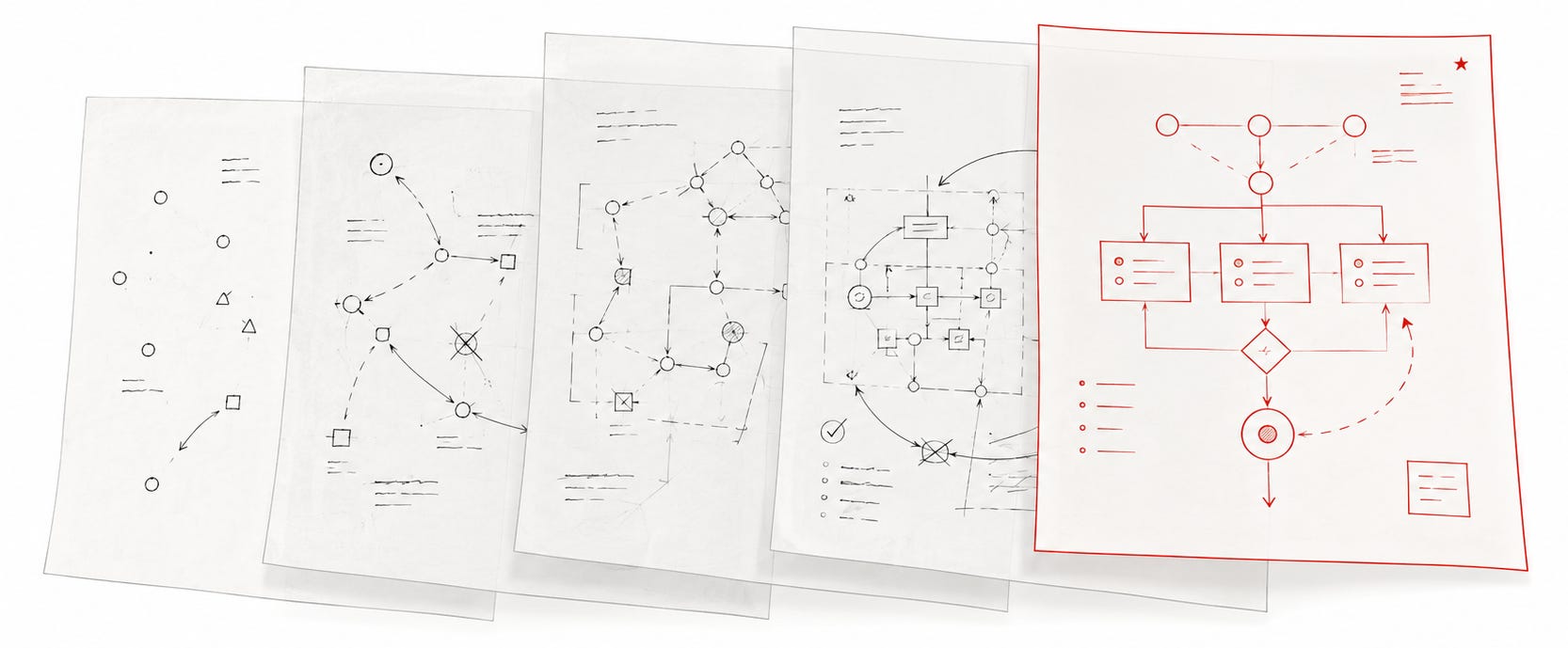
Publishing ideas that are still evolving has been a foundational principle since that first blog post. Once I realized that writing was how I improved my thinking, I realized that readers shouldn’t only see the finished product, but should also benefit from the thinking while it was evolving.
We would rather share our best current understanding of an important problem today than wait years to publish a version that appears more complete, but is too late to actually help people.
Sometimes that means an article is Version 1. Sometimes it’s Version 2. Sometimes we realize we were wrong and need to rethink the problem entirely.
One of our most-read essays, The Evolution of Left of Bang, has been revised multiple times over the years. We haven’t changed it because it was “wrong,” but because the clients and professionals we are working with have taught us something new. Those experiences changed our understanding of the framework, and the article changed with it.
This isn’t just about how we write though. The question, at least to me is, what does that mean for you as a subscriber?
It means that you’ll see ideas develop over time instead of being presented as immutable doctrine. It means that every article is written with the same question in mind: Will this help someone make a better decision before a crisis, disruption, or opportunity presents itself?
That’s the standard we try to hold ourselves to. Sometimes we hit it. Sometimes we don’t. And we don’t promise a perfect writing process or promise that our methods, tools, or approach will never change.
But what we do promise is that every article represents our best current understanding of problems that are important to professionals working to get left of bang.
Even though what we write about has changed in the past fifteen years, we’ve remained remarkably consistent to that mission.
We’re still learning, refining, and writing, but that is what The CP Journal means to me. We’re still doing that for the people who raise their hand and accept the responsibility of protecting others.
If you’ve been with us since the beginning, thank you for that support. It means more to us than you know. If you’re new to The CP Journal, thanks for joining us on this journey.
For the past fifteen years, The CP Journal has been our public journal of learning and we hope it continues to help you get left of bang for the next fifteen.
—Patrick
While you're here
We released a new episode of Baselines & Anomalies this week examining what July's flood of incidents teaches us about organizational readiness and decision-making under uncertainty. Watch or listen here, and enable notifications in your profile if you'd like future episodes sent directly to your inbox.
We are all a work in progress. When my 6th child came along and was growing up, my older children complained that I allowed the younger ones privileges that were denied to the older kids when they were that age. I told them that I had learned a thing or two about parenting from raising them. I realized I had been too strict and needed to relax more. Growth is a good thing.
I’m here for it. Reminding yourself of your origins while you continue to evolve.