

Welcome back to The CP Journal, where we break down what it takes to get left of bang.
I’ve been working this week on a new presentation for an upcoming webinar, and one of the topics it forced me to confront is how normalized violence has quietly become in our country.
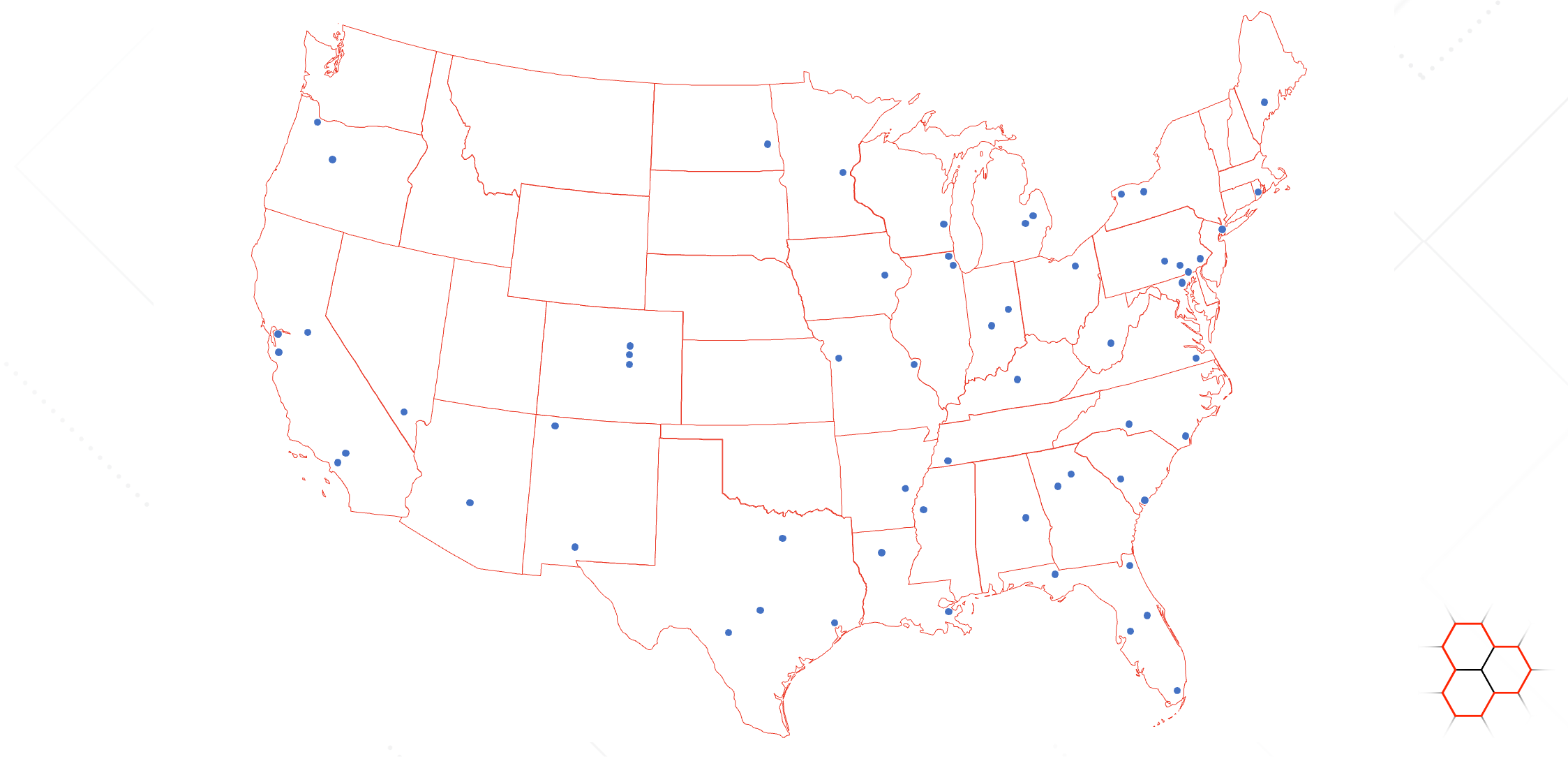
One way that normalization shows up is in how easily we can overlook the sheer volume of public shootings and attacks. The map above highlights only a small sample of incidents from the last five years.
This was not a scientific or comprehensive effort. We didn’t attempt to catalog every incident, nor did we try to show how frequently some communities have been impacted multiple times. We focused on a limited set of public-facing attacks—restaurants and bars, schools and workplaces, public events, places of worship—that we felt represented a broader pattern. We also intentionally excluded incidents confined to private residences or those that might be categorized as gang-on-gang violence.
We could have kept adding dots to the map, but the point wasn’t completeness.
The point is that public shootings and large-scale attacks have become normalized to a degree that should concern all of us. There are likely incidents on this map that, if you looked them up, would prompt a reaction like, “I forgot that happened,” or “I don’t even remember hearing about that one.”
And that reaction often comes from people who work in this field—people whose job it is to pay attention to violence and risk every day. That’s what normalization looks like.
What makes this harder to ignore is that these attacks have occurred despite significant investments in safety and security, and despite enormous effort focused on response and recovery. That suggests, at least to me, that this map doesn’t show a failure of effort but a failure of approach.
If this map were showing commercial airline crashes, we wouldn’t accept it as the “new normal” for air travel. We wouldn’t focus primarily on helping more people survive crashes we assume will continue to happen. We would redesign the system to prevent crashes in the first place.
Yet when it comes to violence, we routinely accept the opposite.
That acceptance is itself a choice. Many of the dots on this map reflect decisions made long before the moment of violence—by organizations, by communities, and by the systems they operate within—to remain reactive rather than proactive.
But we can also choose what this map will look like five years from now.
That choice will determine whether it continues to fill in until it resembles a nighttime satellite image of the United States, with points of light marking nearly every city. Or it will reflect a decision to stop accepting this pattern, to stop normalizing it, and to invest in actually getting left of bang.
If you’re interested in exploring this more deeply, I’ll be discussing these ideas in a webinar hosted by ZeroEyes—a company that takes a genuinely left-of-bang approach to violence prevention. We’ll unpack what “left of bang” actually looks like in practice and how organizations can begin assessing and redesigning their violence prevention capabilities instead of accepting reaction as the default. You can learn more and sign up here.
Inside The CP Journal
Here is an article that was added to the site this week.

We talked about this topic a bit in last week’s newsletter, but what does it mean to “be ready”? Ready for what? Ready to do what? How will we know if we’ve succeeded?
For our paid subscribers, we break down this question in this essay about readiness and show what becomes possible when we shift from abstract or subjective descriptions of readiness to being able to say, “We are ready for X, to do Y, to Z standards.”
This Week‘s Reads
Here are a few standout reads from this week with insights, ideas, and perspectives that caught my attention.
Report | Top Risks For 2026. Ian Bremmer and the Eurasia Group’s annual report on political risks most likely to play out over the course of the year are always interesting and thought-provoking reads. Things that made the cut this year: U.S. political revolution, Russia’s hybrid war with NATO, state capitalism, AI, and the use of water as a weapon. Remember, though, the early recognition of a threat that matters to you only matters if you do something to either prevent it or position yourself for success when it happens.
Visualization | LA Fire Spread. As we mark the first anniversary of the 2025 LA Fires, I found this visualization showing the sprea’ spread to be really well done. Seeing how fast the Palisades and Eaton Fires grew, seeing when and where they burned into mountainous areas and where they dropped into the built environment, and the challenge the wind-driven fires presented responders and communities, offers a perspective not easily seen from on-the-ground videos and reports.
Article | Command Under Fire. This article, written by Jon Becker, host of The Debrief podcast, looks at the decision-making approach that Kevin Cyr, commander of one of the largest police tactical units in North America, uses on operations. From deciding whether a decision needs to be made, figuring out the options, knowing what would make him say “yes,” and deciding who needs to make the decision, the article offers a number of things to get you thinking about how you deal with decisions and risks in high-pressure situations.
Before You Go
Found this useful? Share it. Passing this along helps grow a community focused on staying left of bang.
If you want to go deeper, a paid subscription gives you access to advanced courses, playbooks, and exclusive leadership writing.
And if you’re working to strengthen organizational preparedness, that’s our work—from strategy and assessments to planning and exercises.
The map is staggering and your points are profound. Wish I could attend the webinar!
Brilliant. I was having dinner with some college students last night. One of them, a female, asked if she should start carrying a knife to help protect herself. I tried to dissuade her; I don’t know if I was successful or not but I delivered a copy of Left of Bang to her this morning. She’s a bright woman. If I didn’t dissuade her, hopefully your book will. I trust she’ll read it.