
The Project Execution Playbook is available to paid subscribers to The CP Journal through our Academy.
Professionals who lead important work rarely suffer from a lack of effort. They’re already juggling competing priorities, incomplete information, shifting requirements, and limited time. The problem isn’t adding another task—it’s ensuring the work already underway actually gets finished.
When projects are executed well, organizations move faster, adapt more effectively, and deliver results that matter. When they aren’t, even well-intentioned efforts stall, drift, or collapse under pressure.
This Playbook is written for people responsible for making things happen in complex environments. Much of the thinking here is drawn from emergency management and public safety—fields where execution failures are visible and consequences are real. That focus reflects where this system was developed and tested.
At the same time, the execution principles extend well beyond disaster preparedness. The same phases that drive preparedness projects also guide military operations, organizational capability development, and mission-driven work anywhere outcomes matter.
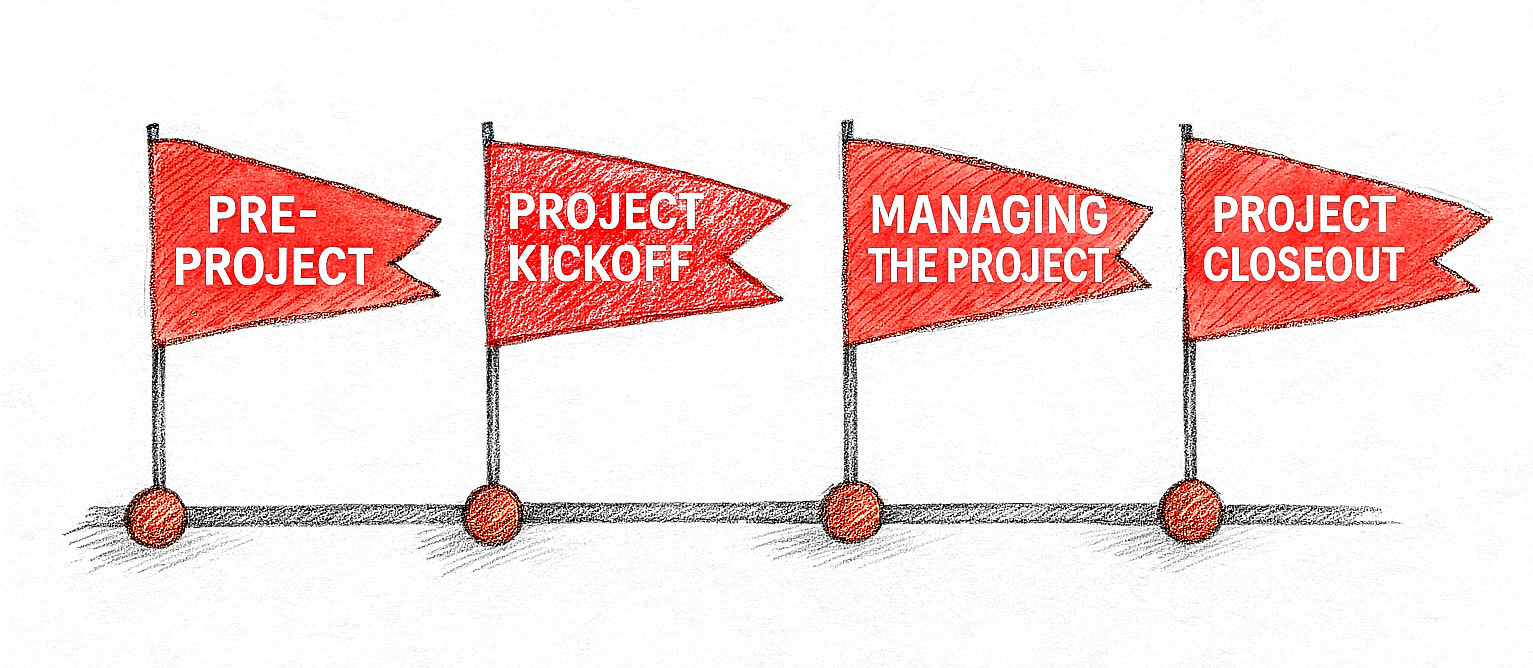
This Playbook documents a clear, step-by-step system for executing projects with purpose and discipline. It provides structure when conditions are uncertain, practical tools to maintain momentum, and a common language for moving from intent to action. Used well, it helps leaders shift from planning to execution—and from effort to results.
Take control of your projects. Better execution leads to better outcomes.
Table of Contents
This Playbook is a living resource, developed through ongoing client work and updated as new lessons emerge from real-world execution.
Section 1 | Laying the Foundation
Chapter 1 | Let’s Get One Thing Clear (Public Article)
Chapter 2 | Why PM in EM Matters | Part 1
Chapter 3 | Why PM in EM Matters | Part 2
Chapter 4 | The Project Manager | Defined
Chapter 5 | The Project Executive is Not the PM
Chapter 6 | How to Use This Playbook
Bonus Chapter | PM in EM: A Career Accelerator (Public Article)
Bonus Chapter | Should I learn agile or waterfall approaches? Both
Prequel Section | Project Selection
Chapter 1 | Strategic Capabilities and Scenario Planning
Chapter 2 | How a “Project Management Office” Structure Can Improve How You Prepare (Public Article)
Chapter 3 | Beyond the Illusion of Capability: A leader’s guide to replacing assumption with clarity, rigor, and readiness. (Public Article)
Chapter 3 | Five Steps to Assess Your Capabilities and Programs
Chapter 4 | Getting the Exercise Type Right
Chapter 5 | Comprehensive Planning for Active Threat Incidents
Chapter 6 | How the Shape of Your Preparedness Cycle Impacts Your Readiness (Public Article)
Section 2 | Project Kickoff
Chapter 1 | So It Begins | Project Kickoff (Public Article)
Chapter 2 | The Project Management Plan
Chapter 3 | Defining “Done” | Setting Your Project Goals
Chapter 4 | Project Design: Turning Goals Into a Roadmap
Chapter 5 | Stakeholder Identification and Engagement Planning
Chapter 6 | Building the Team That Delivers
Chapter 7 | From Tasks to Costs: Building a Project Budget That Works
Chapter 8 | The Project Kickoff Meeting
Chapter 9 | How Fast Can You Launch? Completing a Kickoff That Counts
Bonus Chapter | The Three Questions Every Project Team Should Answer on Day One (Public Article)
Section 3 | Managing the Project
Chapter 1 | Getting The Job Done (Public Article)
Chapter 2 | Learning, Discovery, and Analysis
Part 1: Standing on the Shoulders of Giants | The Document Review
Part 2: From “On Paper” to “In Practice” | Initial Stakeholder Interviews
Chapter 3 | Leading the Project Team
Chapter 4 | Surging Resources to the Project
Chapter 5 | On-Going Project Management
Section 4 | Closing out the Project
Chapter 1 | The Discipline of Done | The Project Closeout
Chapter 2 | The Archive
Chapter 3 | What Comes Next: Recommendations and Lessons Learned
Chapter 4 | The Project Closeout Meeting
Chapter 5 | The Post-Project Roadshow
Chapter 6 | Improving Your Process
Chapter 7 | Closing The Playbook