

This leadership essay is an unlocked essay usually reserved for paying subscribers to The CP Journal.
Many of the serious conversations about getting left of bang don’t happen until something has already gone wrong.
Even in organizations that value proactiveness and see themselves as forward-looking, it’s difficult to sustain focus on problems that haven’t forced themselves into the room yet. Especially in dynamic environments, the work of getting ahead of problems is easily crowded out by the urgency of responding to the ones that have already happened.
That pattern frustrated me for much of my career. It took working in and with organizations trying to make this shift to understand what actually makes it difficult. Leading an organization left of bang means making decisions that aren’t always obvious to others—often before there’s enough shared context to support them.
And that creates risk. Because when a leader pushes for something others don’t yet see, they’re not just proposing an idea. They’re putting their credibility on the line. They have to explain the problem, justify the investment, and carry the uncertainty of whether it will pay off. And if it doesn’t land, it can erode their credibility and make the next effort harder to pursue.
Over time, that’s what keeps organizations operating right of bang.
The Leadership Divide
I don’t believe that most organizations make a conscious decision to operate right of bang. I think they just get there over time. The risk associated with pushing for proactive decisions, combined with the constant pull of immediate problems and a lack of a common terminology to describe the challenges they are facing, makes it easier and politically safer to focus on what’s already happened instead of what could happen next.
What I’ve learned working with our clients is that, on the surface, the difference between left and right of bang organizations isn’t always obvious either. Organizations on both sides of this divide have plans, training programs, and invest time and resources into readying themselves.
But the way those efforts are approached—and the role that leadership plays in shaping them—looks very different.
Right of bang organizations tend to let experience drive their focus. What happened last time becomes the basis for what gets attention next.
Left of bang organizations, on the other hand, approach it differently. They make deliberate decisions about which challenges to prepare for, what capabilities and skills they need to build, and know what “ready” actually means for their organization.
But this is why moving left of bang requires leadership. Organizations don’t get there on their own.
To operate differently—especially when an organization has drifted right of bang by following the path of least resistance—someone has to be willing to challenge it and to push for a different approach before there’s enough shared context to support it. First, organizations need someone to take on the risk that comes with being early, before the next event forces the issue, and then second, see the shift through until it becomes the way the organization operates.
That’s the role of the leader.
The Leaders Who Get Left of Bang
The leaders who consistently move their organizations left of bang operate with the same constraints, competing priorities, resource limitations, and pressure to respond to what’s already happening in front of them as those operating right of bang.
Across our work with clients and interviews, we’ve found seven behaviors and patterns that consistently show up in how these leaders operate. Most leaders will recognize some of them in their work, though far fewer are doing them consistently.
They are clear on where they are and where they are trying to go. They understand where their organization sits on the timeline today, and they have a vision for where it needs to be. That clarity allows them to make informed decisions about how to move further left of bang.
They pay close attention to what’s happening around them. Situational awareness—of the people around them, the operating environment, and the trends shaping both—guides how they orient themselves and informs the path forward.
They don’t wait for events to clarify what matters. They make deliberate decisions about what their organization needs to be able to do, and then work backward from that to develop the capabilities.
They don’t confuse activity with progress. They look for ways to understand whether their efforts are actually improving the organization’s ability to perform, or just keeping them busy.
They don’t accept that certain outcomes are just the cost of doing business. The threats to life, the organization, or the community aren’t abstract risks, but are problems to be solved. And that drives a relentless focus on building the capabilities required to address them.
They don’t build those capabilities for themselves alone. They work to institutionalize them so the organization can continue to operate and prepare left of bang, regardless of who is in the role.
They understand that awareness, by itself, isn’t enough. The ability to make decisions and act decisively is what ultimately determines whether any of it matters.
This isn’t to imply it is easy. There’s no triggering event to validate the decisions, and there are no guarantees they’ll be correct. Which means the responsibility falls on the leader to create that clarity—to define the priorities, how progress will be measured, and move forward without waiting for either to emerge on their own.
The Way Forward
Left-of-bang leadership behaviors aren’t limited to one role or one part of an organization. The responsibility to operate left of bang doesn’t sit only with people on the front lines or those sitting in boardrooms. It applies to anyone who has a hand in shaping how the organization operates and prepares for what comes next.
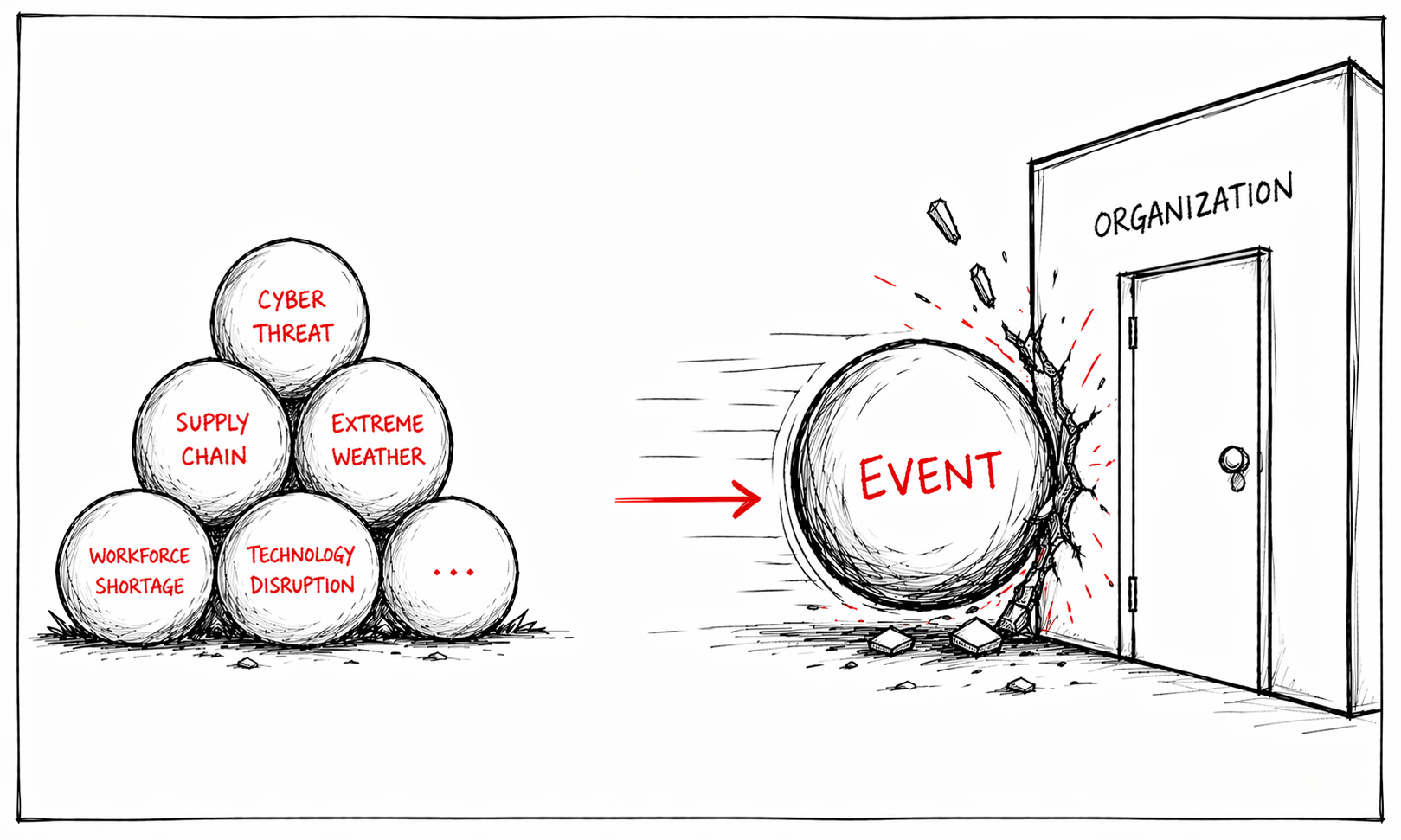
Because the reality is, while many organizations take the path of least resistance, the environment is not waiting for them. Events will continue to test them, whether they’re ready or not. And when they do, the difference shows up quickly.
Organizations and leaders that have invested in building and institutionalizing their capabilities are able to respond with clarity and purpose. Those who haven’t are left trying to figure it out in the moment.
Whether that difference shows up as a competitive advantage, an operational one, or simply in doing right by the people and communities they serve, the outcome is the same—the advantage lies with those who have moved left of bang.
The leadership essays we share with our paid subscribers are where I work through these challenges in more depth. They are grounded in the work we’re doing with clients, the patterns emerging from interviews, and the decisions we’re making as we apply these ideas in our own business.
If you see the role you play in moving your organization left of bang, these essays are built to help you do it.
Before You Go
Found this useful? Share it. If this sparked an idea, pass it along to someone responsible for getting left of bang. That’s how this work spreads.
If you want to go deeper, a paid subscription gives you access to advanced courses, playbooks, and exclusive leadership writing.
And if you’re asking the question many leaders eventually face—are we actually becoming more prepared, or just busier?—the first step is a Strategic Briefing, where we map how your organization is preparing today, identify where gaps exist, and what that means for your ability to perform when it matters.