

Welcome back to The CP Journal, where we break down what it takes to get left of bang.
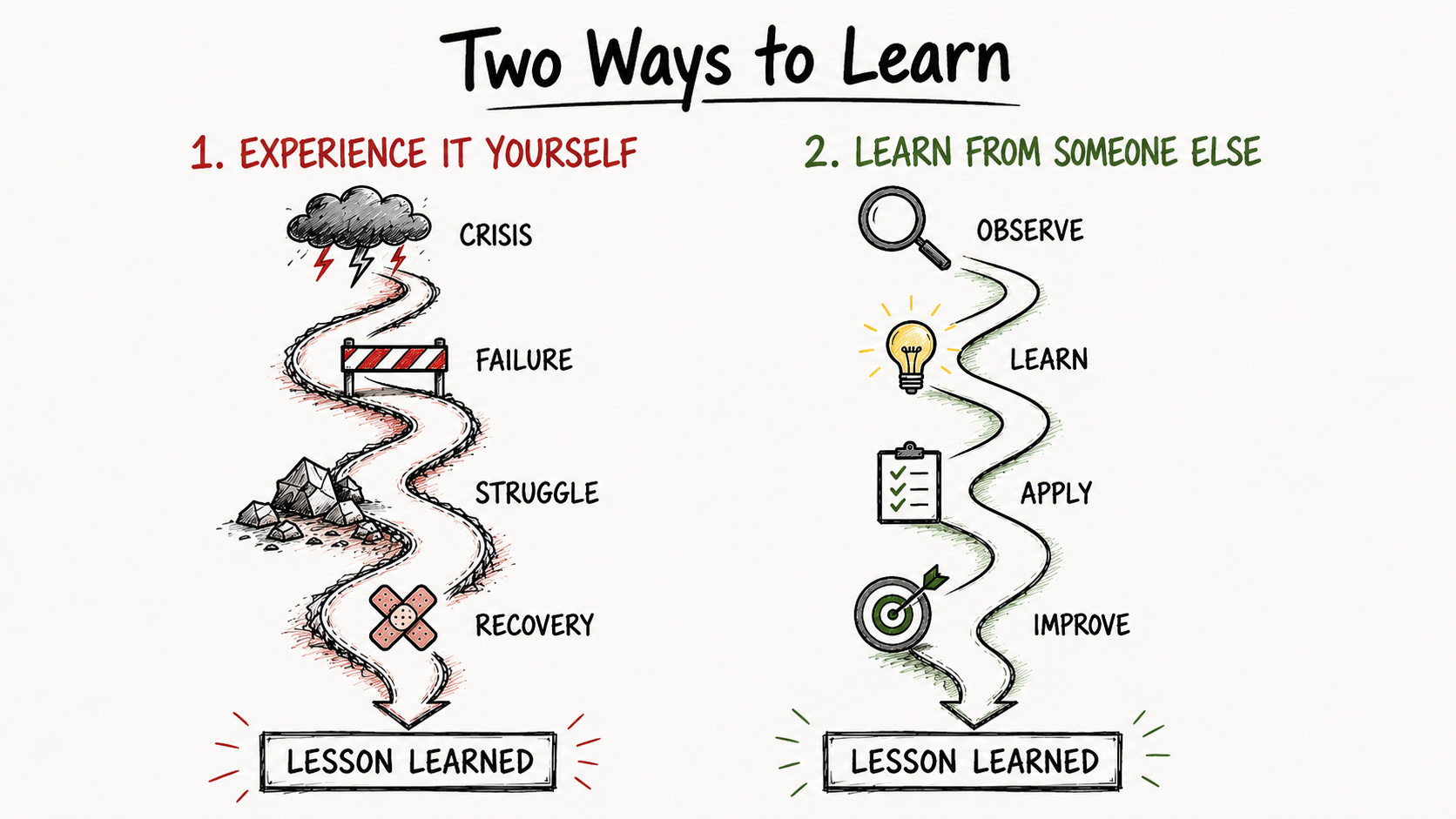
There are two ways to learn a lesson.
The first is to experience it yourself.
The second is to learn it from someone else.
One of those options is much more expensive than the other.
In fact, learning from your own crisis is often the most expensive way to acquire knowledge, only to be surpassed by having to learn the lesson a second time. Of course, sometimes this is unavoidable, but it should not be the preferred method.
Yet when I ask professionals whether they learn from the experiences of others, the answer is almost always yes. They can quickly point to the conferences they attended, the after-action reports they read, the professional associations they belong to, the podcasts they listen to, and the news they follow.
At first glance, these answers seem reasonable. But if organizations are truly learning from the experiences of others, why do so many of the same lessons continue to appear year after year?
Why do after-action reports and post-mortems repeatedly identify communication and coordination challenges, leadership gaps, staffing shortages, training deficiencies, and planning shortfalls that have already been discussed countless times before?
The lesson is often known, the information is available, and the experience has already happened to someone else, yet the same issues continue to appear.
This raises an uncomfortable possibility. Maybe we are better at consuming information than we are at converting it into better performance and greater readiness?
It might seem obvious, but consuming information is different than learning.
Knowing that something happened is not the same thing as understanding why it happened.
Understanding why it happened is not the same thing as changing behavior because of it.
And changing behavior is ultimately the point.
In today’s operating environment, where access to information is no longer the issue or limitation it once was, the question is whether you can convert what you read, watch, or hear into improved readiness.
Even though these two skills are often confused with one another, they are very different. And this confusion becomes most visible when an event you’re reading or hearing about has happened “somewhere else.”
When you hear about a cyberattack, a wildfire, an infrastructure failure, a disease outbreak, or a crisis in another organization or happening in another part of the world, it is easy to quickly dismiss it.
“It doesn’t affect me.”
“It isn’t in my industry.”
“It has never happened here.”
So you move on.
The problem is that this perspective assumes the value of an event lies in the event itself. But it doesn’t. The value lies in the lesson.
Most people naturally look at an event and focus on the likelihood that it will happen to them. They are essentially asking, “Could this happen here?” But organizations that consistently get left of bang ask, “What can I learn from this before I need the lesson myself?”
I recognize that this shift seems very small, but it really isn’t. The first question focuses on the event and probability, while the second question focuses on the pattern and readiness.
To learn about how likelihood, impact, and readiness combine to inform risk and opportunity assessments, start with our event assessment article.

This is why studying past and current events is so important. The goal of learning how to do this well isn’t to predict the future, become more aware, entertain yourself, or spend hours doomscrolling through articles and analysis.
We do it so we can identify patterns before they become our problem. That is why learning how to learn from others is a critical skill to prepare for an uncertain future.
When a wildfire occurs, there are lessons that extend beyond firefighting.
When a cyberattack occurs, there are lessons for non-technical people.
When a recruiting crisis emerges, there are lessons for many professionals.
The event is simply the vehicle through which the lesson arrives, but the lesson lives within the patterns of performance.
Proactive and forward-looking organizations already understand this. They don’t wait for a local incident to become their instructor. They are continually learning from the failures, near misses, successes, and experiences of others. They use those lessons to identify gaps, challenge assumptions, and improve their readiness before circumstances force the issue.
The question is not whether there are lessons available.
The question is whether you have learned how to recognize them before they become personal.
The Path From Consumption to Action
Our recommendation is not to leave this to chance. While some situations will provide easily identifiable lessons, others will be more nuanced. Having a process to assess external events can help organizations take the first steps to changing their behavior, and then, through practice, it can become ingrained in your organization’s culture and day-to-day work.
At The CP Journal, we use the Recognize → Assess → Decide → Act structure to ensure we aren’t merely consuming information, but converting it into action. That sequence forms the mechanics for our practice.
We recently applied this process to better understand the lessons from the current Ebola outbreak in the DR Congo for our paying subscribers. Not because the virus is likely to affect most readers direclty, but because the event contains lessons that are relevant long before a similar challenge reaches your organization.

Before You Go
Organizations get left of bang when leaders begin asking different questions. Share this with someone responsible for preparing their organization for an uncertain future.
If you want to go deeper, a paid subscription gives you access to advanced courses, playbooks, and exclusive leadership writing.